
Downe
Downe, Bromley
A country village of ‘extreme quietness and rusticity’, located three miles south-west of Orpington
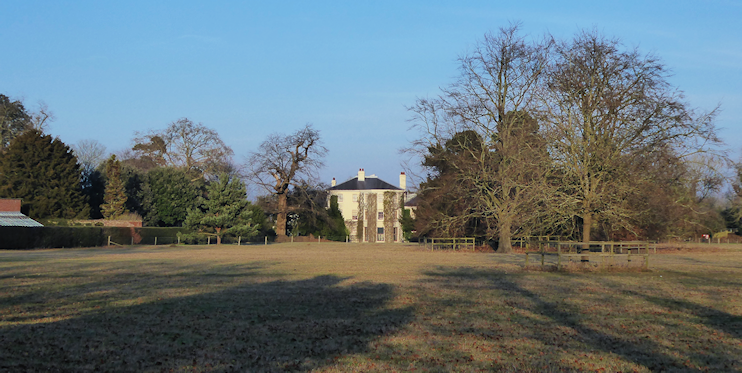
The village’s name was first recorded in 1283 and derives from the Old English dun, a hill. It was often spelt ‘Down’ and it has been claimed that the Post Office encouraged the addition of a superfluous ‘e’ to avoid confusion with County Down in Ulster.
This is a very scattered village, with weatherboarded cottages and brick and flint houses dotted around in all directions but especially to the south. A chapel was built in 1291 and may have stood on the site of St Mary’s church. The fabric of the present church dates primarily from the 16th century.
Downe Court was built in 1690 on the site of an earlier manor house, which was probably surrounded by a moat. English Heritage has placed Downe Court on its register of buildings at risk because it is “starting to show the effects of long term neglect.” On Luxted Road, a handsome house called Petleys was built in the early 18th century and later became a home of the Wedgwood pottery family.
In 1842 Josiah Wedgwood’s daughter Emma came to live at Down House, a former parsonage at the southern end of the village, with her husband Charles Darwin. In his (posthumously published) autobiography Darwin recalled his satisfaction with his new home:
“After several fruitless searches in Surrey and elsewhere, we found this house and purchased it. I was pleased with the diversified appearance of vegetation proper to a chalk district, and so unlike what I had been accustomed to in the Midland counties; and still more pleased with the extreme quietness and rusticity of the place. It is not, however, quite so retired a place as a writer in a German periodical makes it, who says that my house can be approached only by a mule-track!”
The great scientist took a daily stroll around a circuit of the grounds known as the ‘Sandwalk’, set up a laboratory in a brick hut and cultivated orchids in the greenhouse. Darwin lived at Down House until his death in 1882 and he wrote all his most important works here, including The Origin of Species.
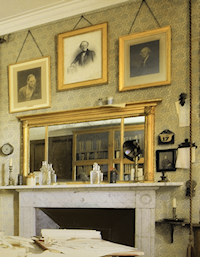
Downe remained a farming village into the 20th century, producing fruit and vegetables for the London markets. With its isolated location, the village attracted walkers and cyclists to its tearooms and pubs. Down House became a Darwin museum in 1929 and was acquired by English Heritage in 1996.
Darwin’s study, where he did most of his writing and microscope work, has been recreated from photographs. Crammed with books, files and specimens, its amenities included a spittoon and a discreetly curtained privy. Modern educational displays fill the rooms of the first floor.
To the south-east of the house is Downe Bank – or Orchis Bank, as Darwin knew it. Now a Kent Wildlife Trust property, the wood is rich in orchids and provides one of Britain’s best displays of bluebells in spring.
In 2009 the government nominated Down House and the surrounding area in which Darwin walked and thought as a world heritage site that it called ‘Darwin’s Laboratory’. As the Department for Culture, Media and Sport (DCMS) pointed out: “Few properties and their environs can claim to have been as central to the life and work of one person as Down House.” Unesco’s world heritage committee rejected the bid but it appears that the DCMS intends to keep trying in future years.
Down House is located near the bottom of the map below. Please zoom (and drag) the map to see a detailed plan of the grounds, including the route of the Sandwalk.
Postcode area: Orpington, BR6
Further reading: Janet Browne, Charles Darwin: The Power of Place, Jonathan Cape, 2002
Website: Down House