Index of Places The 350 localities and attractions featured on Hidden London The places listed below are in the Gazetteer section unless marked as being in The Guide Places in the Gazetteer section are mostly localities, while those in the Guide tend to be smaller – often an individual structure. Some places in the Guide are double-indexed, to help you find them more easily. A few listed places have yet to be added, so they don’t yet have a h…
Surviving annex of Westminster’s medieval palace Jewel Tower, Abingdon Street, Westminster The Jewel Tower, viewed from the east This is not the repository of the Crown Jewels, which are stored in the Jewel House (formerly also known as the Jewel Tower) at the Tower of London. However, Westminster’s Jewel Tower was originally built to accommodate the royal valuables, as a branch of the King’s Privy Wardrobe. On the recommendation of William …
…cept signs that it had already been dug out before. It is said that, if confirmation had been found, Thomas Thornycroft’s statue of the queen in her chariot would have been erected at that spot, instead of its present site at Westminster Bridge. Burlington Bertie A would-be elegant ‘man about town’ or ‘masher’, personified by Vesta Tilley in a popular song of this name by Harry B. Norris (1900). William Hargreaves wrote a well-known parody ve…
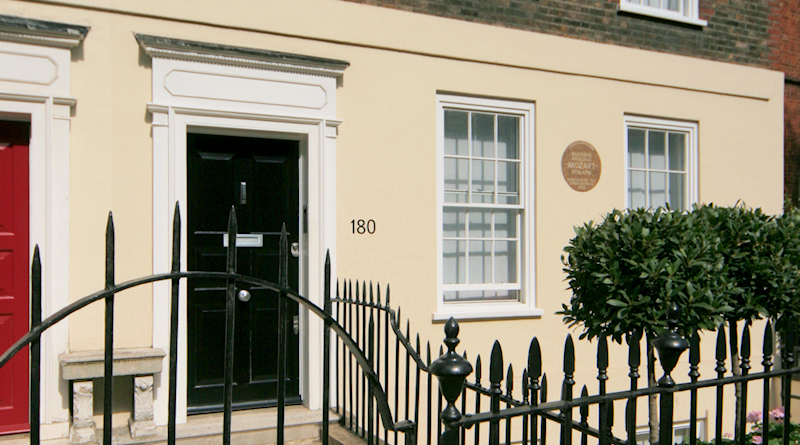
…ipal – has now replaced almost all the original industry. The Mozart council estate has been a particularly unpopular place to live. In Brent’s Queens Park ward (no apostrophe) the majority of homes are owner occupied but in Westminster’s Queen’s Park ward (with an apostrophe) most are rented from the council or a housing association. Around 60 per cent of Queen’s Park’s residents are white and the main ethnic minorities are of black Caribbean, …
Vine Street, Westminster The most obscure location on the British Monopoly board, branching off Swallow Street in the apex formed by Piccadilly and Regent Street A relatively interesting view of one of the dullest streets in London, from Man in the Moon Passage The name seems to derive from the Vine public house, which existed in the 18th century and probably earlier, when the street was longer than it is now; the section that remains today wa…
Wimpole Street, Westminster A ‘long unlovely street’, according to Tennyson, running north–south through central Marylebone and now best known for dentistry Wimpole Street, at the junction with New Cavendish Street Wimpole Hall is a palatial house in Cambridgeshire that belonged to the Harley family, developers of the Cavendish estate – which takes in much of this part of Marylebone. Begun around 1724, Wimpole Street had just seven houses by th…
…he eldest son of England’s monarchs ever since as part of the Duchy of Cornwall. From 1622 the duchy started to grant leases to Kennington’s residents, giving them an incentive to improve their properties. The construction of Westminster Bridge in 1750 brought accessibility and early popularity as a place of residence. Most of the modern layout of Kennington was set by 1799, although the south-western part, including Kennington Oval, developed…
Warwick Avenue, Westminster A broad, stuccoed street in southern Maida Vale, running north-westwards from the Harrow Road at Little Venice to Sutherland Avenue Warwick Avenue cabmen’s shelter This was originally a track called Green Lane and was named Warwick Road (later changed to Avenue) on the street plan produced in 1827 by George Gutch, surveyor to the Bishop of London. Gutch named the road after Jane Warwick, of Warwick Hall near Carlis…
West Hendon, Barnet One of the borough’s poorer quarters, West Hendon is separated from Hendon proper by the M1 motorway West Hendon Baptist church The land hereabouts was once part of Tunworth (now Kingsbury) but, by passing into the ownership of Westminster Abbey, came within the parish and manor of Hendon in the late tenth century. Although the locality attracted visitors following the creation of the Welsh Harp reservoir in the 1830s, no se…
…nter’s daughter, who died of scarlet fever at the age of eight. Finborough Road is named after the country seat of the Pettiward family, another local landowner. Brompton cemetery was founded in 1837 as the West of London and Westminster Cemetery. It has a formal layout with a central chapel, based on St Peter’s Basilica in Rome. Previously the land had been fields and market gardens, mainly owned by Lord Kensington. An additional 4½ acres was ob…