Index of Places The 350 localities and attractions featured on Hidden London The places listed below are in the Gazetteer section unless marked as being in The Guide Places in the Gazetteer section are mostly localities, while those in the Guide tend to be smaller – often an individual structure. Some places in the Guide are double-indexed, to help you find them more easily. A few listed places have yet to be added, so they don’t yet have a h…
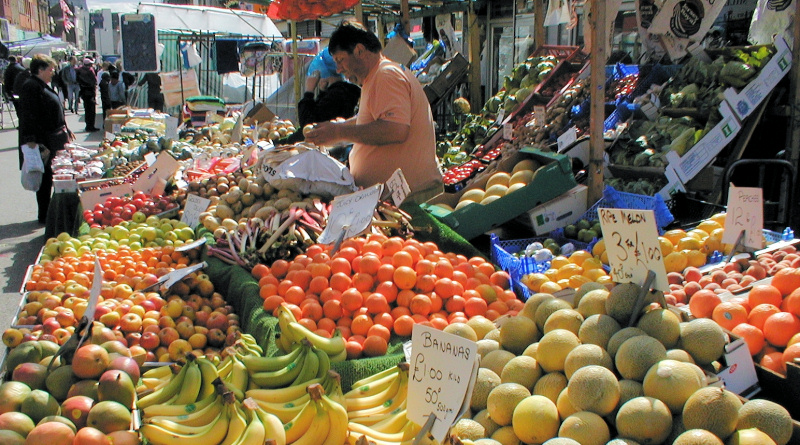
Chapel Market, Islington A thriving but threatened street market, located off the southern end of Liverpool Road, near the Angel, Islington A fruit stall in Chapel Market At the close of the 18th century townhouses with rear gardens were built along what was then Chapel Street, when it formed the eastern boundary of the new suburb of Pentonville. A fire engine house was erected in 1792 and heightened in 1822; it survives today but in poor condi…
Highbury, Islington Famous as the former home of Arsenal football club, Highbury is an elongated settlement in north Islington, between Canonbury and Finsbury Park In the 13th century the farms and woodland here came into the possession of the Knights Hospitallers, a military monastic order. The woods were mostly cleared during the 17th century, by which time the area had become known by its present name because of its relatively elevated posi…
Canonbury, Islington A Georgian and early-Victorian suburb in east Islington, fringed by post-war council estates Canonbury Tower Canonbury, the ‘manor of the canons’ of St Bartholomew’s Priory in Smithfield, was first recorded in 1373. Canonbury House was in existence by this date and stood isolated here for almost four centuries. The house underwent a succession of alterations and partial demolitions, of which the lasting results are 16t…
Essex Road, Islington An evolving street running north-east from Islington Green in the direction of Stoke Newington The interior of an antiques and bric-à-brac emporium on Essex Road Essex Road’s route may be of Roman origin and was certainly well-established by the Middle Ages. The road has gone by a variety of names for part or all of its length, including Seveney Street, Lower Street and Lower Road. There were some substantial prope…
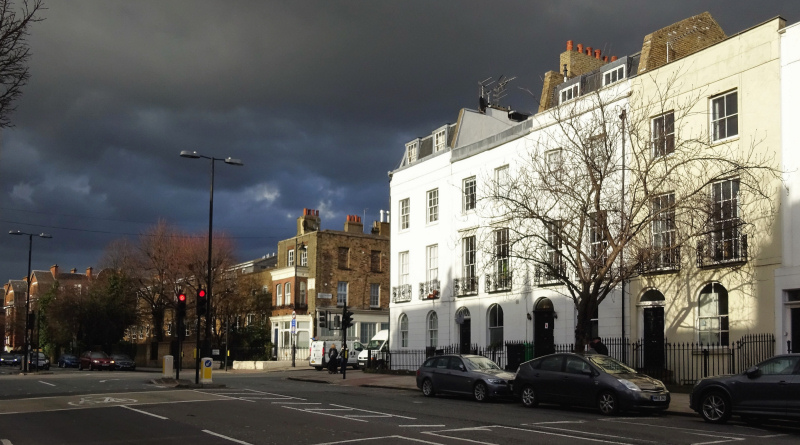
Barnsbury, Islington London’s pioneering gentrified locality, consisting of a mix of older terraces and squares – and council blocks – in north-west Islington Barnsbury Stores, on Hemingford Road The 13th-century Berners family gave their name to a large manor, of which present day Barnsbury covers just a small part. Legal obstacles prevented building on the land until the 1820s, significantly later than nearby districts such as Canonbury.…
Pentonville, Islington An underprivileged inner-city district situated between King’s Cross and the Angel Pentonville prison (which is really in Barnsbury) opened in 1842 and is one of London’s busiest ‘local’ prisons Britain’s earliest ring road, the New Road, brought access to the land west of Islington in 1756. The development opportunity was seized by Captain Henry Penton, MP for Winchester, who began to lay out what has been called L…
Bunhill, Islington An electoral ward that takes its name from a renowned Dissenters’ burial ground at the southern end of City Road John Bunyan’s memorial in Bunhill Fields Bunhill Fields, which is a corruption of Bone Hill Fields, had been associated with interments since Saxon times and became a Quaker burial ground in 1665, the year of the plague. It was popular with Dissenters of various denominations because the ground was unconsecrated.…
…he century. Dartmouth Park Road was endowed with some very spacious properties but those nearer Dartmouth Park Hill were priced more affordably. The terraced houses of Highgate New Town extended across the borough border into Islington during the 1880s, while the Conservative Land Society laid out Spencer Rise, Churchill Road and Ingestre Road near Tufnell Park. Around the same time the New River Company built a pumping station and two covered r…
Nag’s Head, Islington A bustling commercial zone situated around the junction of Seven Sisters Road with Holloway Road, regarded by Islington council as one of the borough’s two most important ‘town centres’ Outside the the compact Nag’s Head shopping mall on Holloway Road The locality is named after a public house that has stood here for around 200 years. The poet and painter Edward Lear, best known for his nonsense verse, was born at Bowman’s…