Index of Places The 350 localities and attractions featured on Hidden London The places listed below are in the Gazetteer section unless marked as being in The Guide Places in the Gazetteer section are mostly localities, while those in the Guide tend to be smaller – often an individual structure. Some places in the Guide are double-indexed, to help you find them more easily. A few listed places have yet to be added, so they don’t yet have a h…
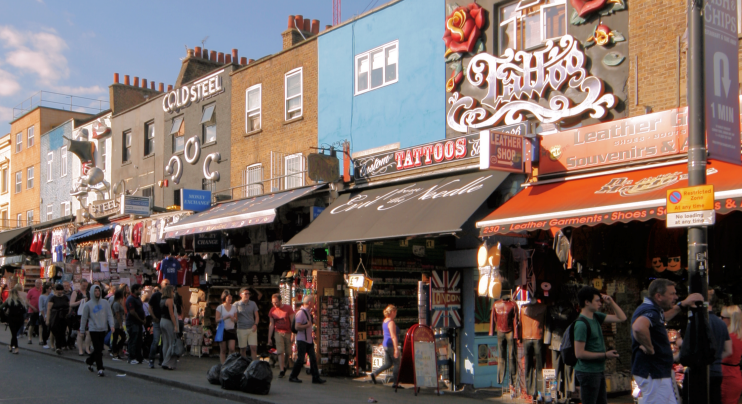
Mornington Crescent, Camden A street and tube station located at the junction of Hampstead Road and Camden High Street The former Black Cat cigarette factory echoes the Egyptian temple to the cat-goddess at Bubastis The crescent was created in the 1820s and named for the Earl of Mornington. A decade later the Duke of Bedford’s Figs Mead estate was laid out with stuccoed terraces and at first called Bedford New Town. Bombing raids on the nearb…
Notes for non-Londoners Information to help you get the most from this website – and from London (This page is in its infancy) The boroughs of London London is divided into 32 boroughs, plus the City of London. Every page heading in the Gazetteer section identifies the parent borough of the locality in question – which could potentially be misleading to the uninitiated. New End, for example, is stated as being in the borough of Camden. But …
Highgate, Camden/Haringey A much-extended village standing on high ground north-east of Hampstead Heath Highgate took root around a village green peppered with ponds and elm trees, at the top of a 426-foot hill on the edge of the Bishop of London’s estate. It was the bishop who erected a tollgate here sometime before 1354, when Highgate’s name was first recorded. Later in the same century Dick Whittington is supposed to have sat upon a m…
Somers Town, Camden Sandwiched between Euston and St Pancras stations, Somers Town (pronounced ‘summerstown’) has been transformed several times in its 200-year existence The forecourt of the British Library At the end of the 17th century John Somers, Lord Chancellor and later Baron Somers of Evesham, acquired the local freehold. The arrival of the New Road (now Euston Road) improved access to the area and in 1793 Frenchman Jacob Leroux leas…
Dartmouth Park, Camden/Islington A group of well-built Victorian estates in south Highgate Dartmouth Park Hill Dartmouth Park Hill was originally part of the oldest road in Highgate, a mucky track through thick forest that later became part of the manor and parish boundaries. The earls of Dartmouth acquired much of the land here in the 18th century. To the south-west of their estate, luxurious four-bedroom homes lined Grove Terrace in 17…
Tolmers Village, Camden An urban community in West Euston, with Tolmers Square in its south-west corner Tolmers Square today is stupendously dull but not so long ago it was a crucible of anti-capitalist protest and direct action Tolmers Square was laid out with housing from 1861 to 1864 on land belonging to the New River Company, and named after a Hertfordshire hamlet near the river’s source. The properties were built to a standard that was…
Park Village, Camden A delightful pair of streets on the south-western edge of Camden Town, created in the 1820s by John Nash as part of his master plan for Regent’s Park No.17 Park Village West, where Dr Pusey founded the Anglican Church’s first sisterhood Park Village West – which survives intact – is a crescent located just north of Regent’s Park barracks, off Albany Street. Park Village East meanders gently south as an extension of Prince…
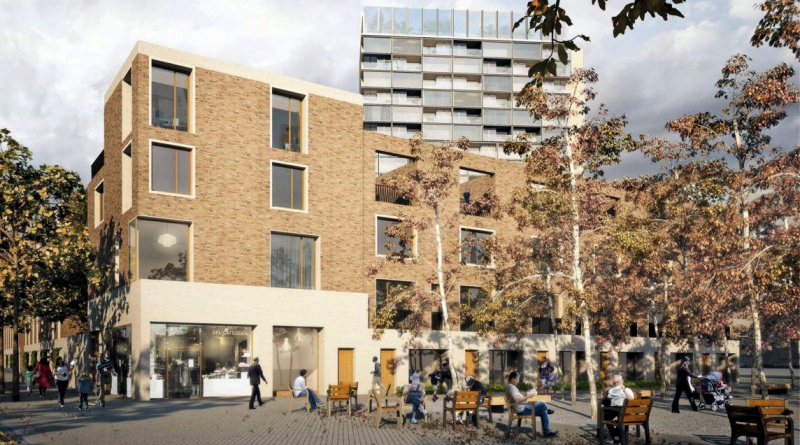
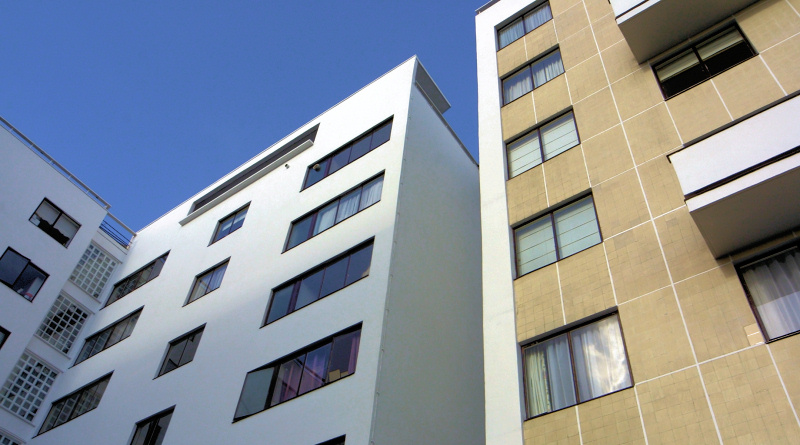
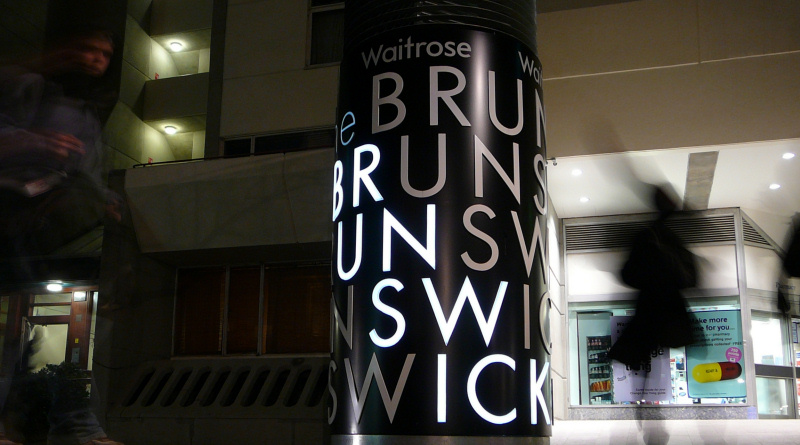
Brunswick, Camden A concrete megastructure and its immediate environs, built in the late 1960s on the borders of St Pancras and Bloomsbury, north-east of Russell Square This Waitrose supermarket is the anchor store of the newly revitalised Brunswick shopping mall This was the site of a series of Georgian and Victorian terraces, deemed substandard and overcrowded by the council – but almost certainly capable of rehabilitation. The architect…
Primrose Hill, Camden A delightful vantage point and its outrageously expensive residential surroundings, situated immediately north of Regent’s Park The woodland here was granted to Eton College by Henry VI, at a time when the name Primrose Hill was first coming into use. The hill was cleared of trees in the mid-17th century and remained as farmland until the arrival of the railway, when both the college and neighbouring landowner Lord Sou…