Barking, Barking & Dagenham A major east London centre, situated south of Ilford and east of the River Roding, little visited by those from outside its immediate hinterland What little remains of Barking Abbey Evidence of Roman occupation has been discovered here and Barking was one of the earliest Saxon settlements east of London, established on a habitable site near navigable water. St Erkenwald founded Barking Abbey in 666 and William t…
…ll Town (Lambeth) Archway (Islington) Arnos Grove (Enfield) Arnos Grove station (Enfield) The Guide Arsenal (Islington) Ashburnham Triangle (Greenwich) Avery Hill (Greenwich) B Bakers Arms (Waltham Forest) Balham (Wandsworth) Barking (Barking & Dagenham) Barnehurst (Bexley) Barnes Cray (Bexley) Barnet Gate (Barnet) Barnsbury (Islington) Barons Court (Hammersmith & Fulham) Battersea (Wandsworth) Beavers Farm (Hounslow) Beckenham (Bromley) …
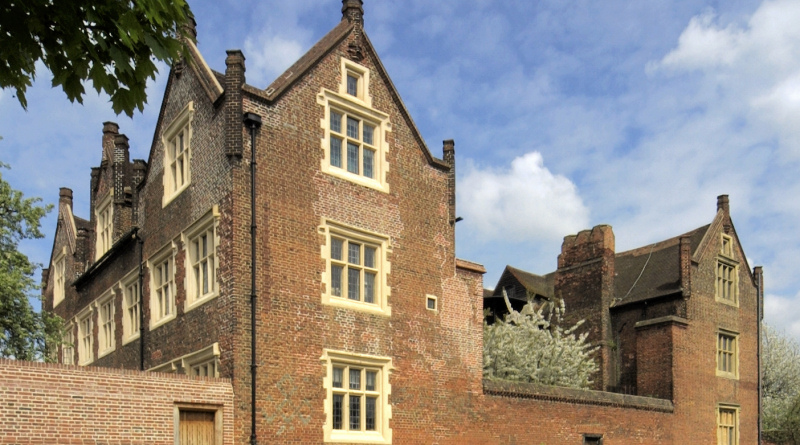
Upney, Barking & Dagenham A former village, now consumed within eastern Barking Eastbury Manor House Upney is something of a rarity in the geography of London: a place that has lost its identity despite having a station that bears its name – a name that means ‘higher island’, implying that it was once surrounded by marshes. Most of Upney’s housing was built between the wars as part of the council’s slum clearance programme. The dominant fea…
Loxford, Redbridge A densely built-up, multi-ethnic locality in south Ilford The medieval manor of Loxford was in the possession of Barking Abbey and in 1319 the Abbess of Barking was licensed to fell oaks in Hainault Forest to rebuild her house here after a fire. The present Loxford Hall dates from about 1830 and was enlarged around 1860. The terraced street plan of the Loxford Hall estate was laid out at the end of the 19th century as one…
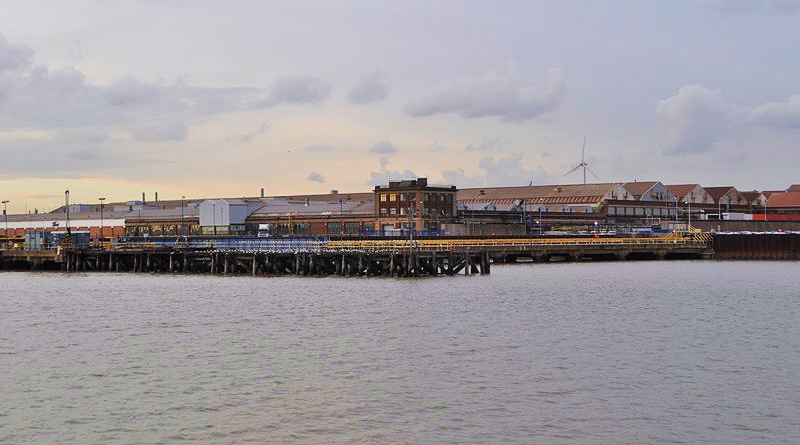
Dagenham Dock, Barking & Dagenham An industrial and bulk storage district built on Dagenham Marshes, south of the A13 A car breaker’s yard, with Barking Reach power station in the distance The old docks were constructed in 1887 around Dagenham Breach, now a constricted industrial lagoon but originally a local beauty spot, created in the early 18th century by the Thames’ irrepressible habit of breaking through flood defences. The docks’ foun…
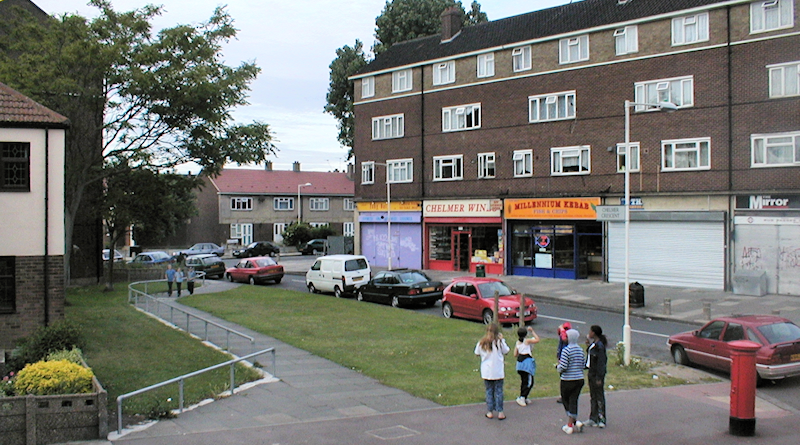
Thames View, Barking & Dagenham A dismal council estate trapped between Creekmouth and the A13 Only social anthropologists would take a sightseeing tour of the Thames View estate This was marshland until the mid-1950s, when the council began building over 2,000 homes using piles and rafts to secure the foundations. Bastable Avenue is the main thoroughfare. With industrial sites scattered in all directions, soulless architecture and a…
Wall End, Newham An electoral ward situated between Barking and East Ham, and the locality centred on the Duke’s Head public house The River Roding at Wall End Wall End’s name is also spelt as one word but neither form is widely used. From the Middle Ages, Wall End was an isolated hamlet on the road to Barking. It was the ‘end’, or outlying part, of East Ham where an embankment prevented the River Roding from flooding. From 1804 to 1827 a pair …
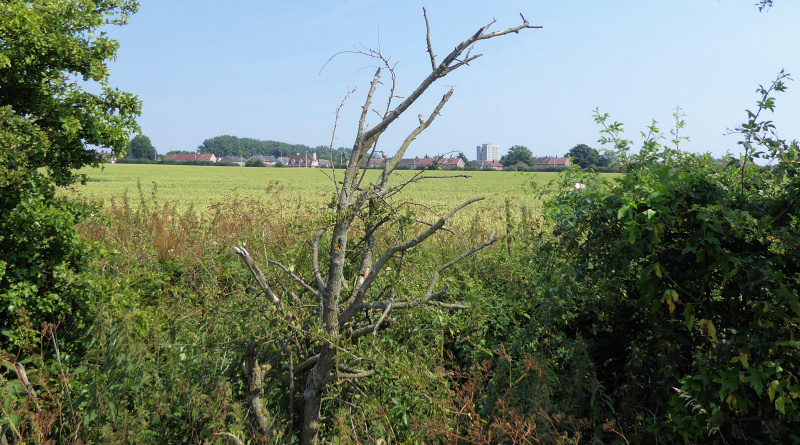
Marks Gate, Barking & Dagenham A northern outpost of the borough, situated a mile north of Chadwell Heath, still surrounded by the fields of wheat, oats, barley that were once its raison d’être Sign at the entrance to the leisure complex Around 600bc a fortified hilltop village was established here, of which almost nothing remains but the hill itself. The medieval manor of Marks was one of Barking’s oldest free tenements (an estate held fo…
…ers Arms area has expanded to absorb the former hamlet of Knotts Green, just to the east, home for many years of the Barclays banking family. Leyton leisure lagoon is the principal local amenity. The rail users’ group for the Barking to Gospel Oak line is campaigning for a new station to be opened at Bakers Arms, but there is no sign of this eventuating. Postal districts: E10 and E17 Website: Barking to Gospel Oak line user group …
Becontree, Barking & Dagenham A gargantuan council estate covering four square miles of former fields, heath and parkland north of Dagenham A re-creation of an original Becontree kitchen in a tableau at Valence House Much of this area was part of Parsloes, once the largest manor in Dagenham and the property of the Passelewe family in 1257. The most recent incarnation of Parsloes manor house was demolished in 1925 owing to its dilapidated…